
Protection was never the problem. Confinement was.
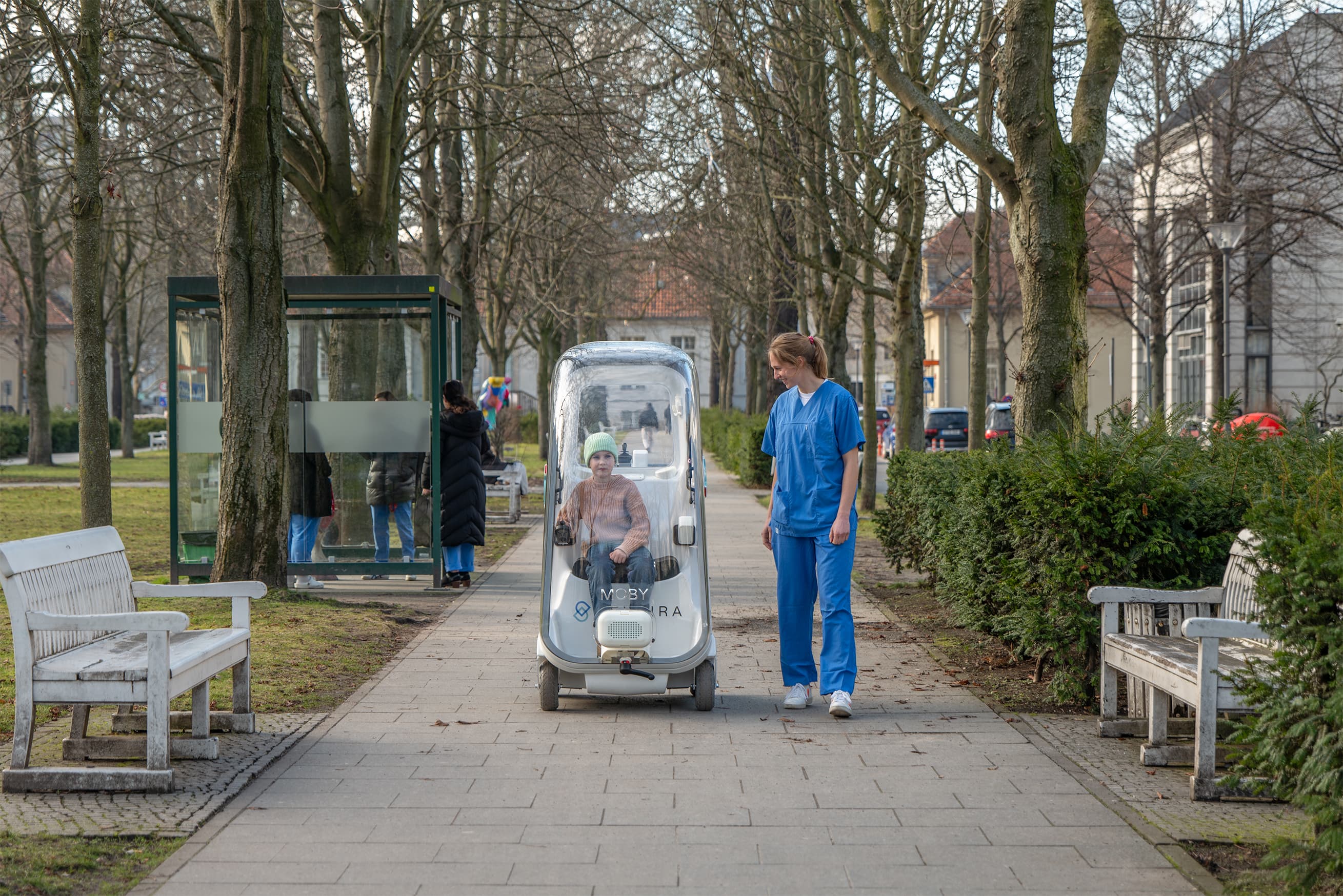
Protective isolation exists to keep pathogens away from the patient. Confinement was never the goal. Until today, it was simply the price. MOBY® carries the protection with the patient, so the walls can stay behind.
Why some patients can't leave their room.
A patient is isolated for one of two reasons, and they point in opposite directions.
To protect the patient.
When the immune system is weakened, whether by chemotherapy, a transplant, an inborn immune deficiency or medication that suppresses it, germs a healthy person never notices can become life-threatening. Protective isolation keeps them out.
To protect everyone else.
When a patient carries a highly infectious pathogen, source isolation keeps it from spreading to other patients, staff and visitors.
Either way, the answer has always been the same: one room, for as long as it takes. MOBY works in both directions: positive pressure for the first, negative pressure for the second.
The difference MOBY makes for stem cell transplant patients
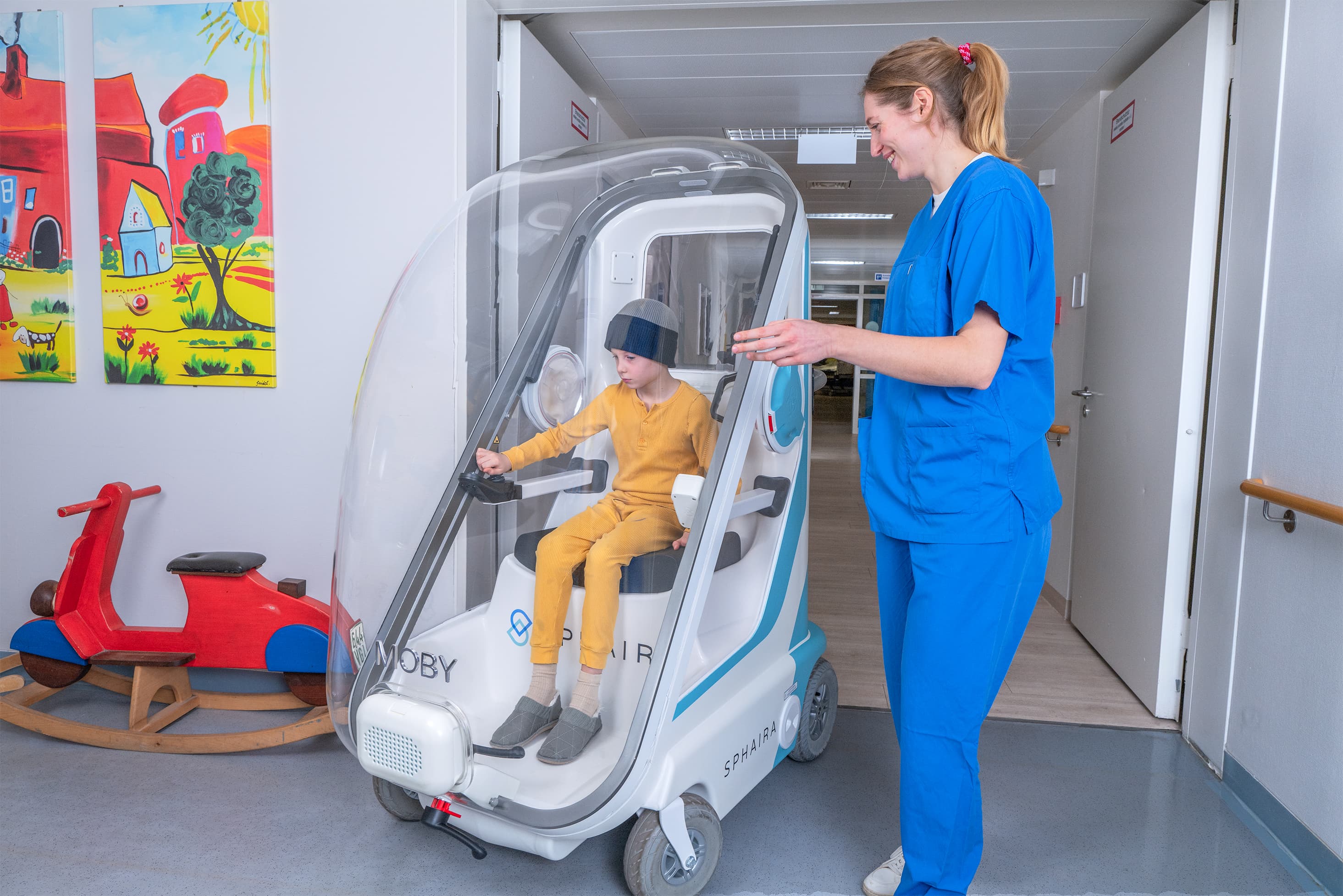
In the weeks after a transplant, while the immune system rebuilds, the patient's world is one room. Family visits are rationed. A CT scan requires a risk assessment and often a delay. Mobilization happens in a few square meters. Discharge is the first time the patient has seen daylight in weeks.
The patient leaves the room and the protection goes with them. Seeing loved ones in a real room, with real contact. Diagnostics and therapy on schedule. Daily mobilization through the unit and beyond.
For the hospital, nothing about the hygiene standard changes. What changes is where the patient can spend the day.
Indications
Stem cell transplantation
The longest, strictest protective isolation in the hospital. After an allogeneic transplant, three to five weeks in one room while the immune system recovers; after an autologous transplant, a shorter but equally strict phase. MOBY lets transplant patients leave the room without leaving protection behind.
Solid organ transplantation
Protected mobility during induction immunosuppression, when the risk of infection is highest and the patient is often already able to move.
Severe burns
Severe burn patients travel often: to the operating room, to diagnostics, to the burn unit and back. Each transfer is a protected transport. MOBY makes it one that keeps the patient enclosed throughout, and allows protected visits from loved ones in the most difficult and vulnerable time.
Pediatric oncology
Children in prolonged neutropenia lose weeks of movement, play and contact. Time outside the room, with protection intact.
Acute myeloid leukemia
Induction and consolidation mean repeated cycles of neutropenia and repeated weeks behind a door. MOBY shortens the distance between cycles and daily life.
Palliative care
Contact and movement when they matter most. For patients who need protection and have little time.
Source isolation
Negative pressure for patients with airborne infections, including tuberculosis. The unit is protected while the patient moves for diagnostics, therapy or a breath of air.
Air flows one way. You choose who sits on the safe side.
Patient inside
Visitor inside
Positive pressure
Filtered air flows in, room air stays out.
Protects the patient.
Transplant patient leaves the room.
Protects the visitor.
Relative visits a patient in source isolation.
Negative pressure
Air flows in and is filtered before it leaves.
Protects everyone outside.
Infectious patient goes to examination or diagnostics.
Protects the patient in the room.
Relative visits a bed-bound patient.
Positive pressure
Filtered air flows in, room air stays out.
Patient inside
Protects the patient.
Transplant patient leaves the room.
Visitor inside
Protects the visitor.
Relative visits a patient in source isolation.
Negative pressure
Air flows in and is filtered before it leaves.
Patient inside
Protects everyone outside.
Infectious patient goes to examination or diagnostics.
Visitor inside
Protects the patient in the room.
Relative visits a bed-bound patient.
Sometimes the visitor needs the pod.
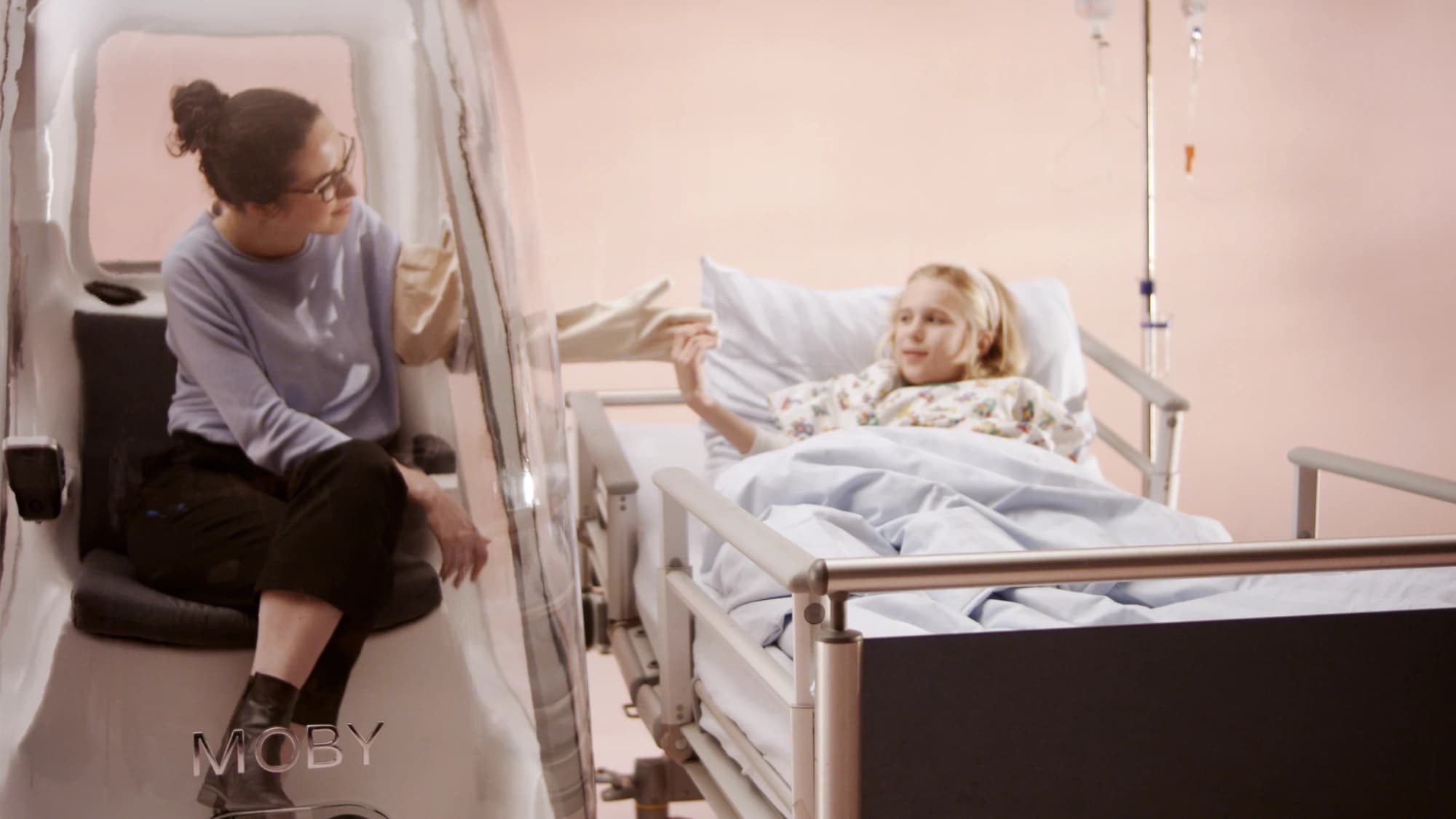
When the patient cannot be moved but the visit still matters, a relative can enter the room in MOBY.
In negative pressure, the patient in protective isolation is shielded from the visitor; in positive pressure, the visitor is shielded from a patient in source isolation. Either way the isolation rules are kept.
This applies across indications where the patient is bed-bound or on equipment that cannot travel.
Isolation doesn't only happen on transplant units.
Intensive care
A relative visits a patient in protective or source isolation on the ICU. The pod moves, the patient doesn't.
Emergency department
A patient arrives with a suspected airborne infection and no isolation room is free. MOBY provides negative-pressure isolation in minutes, wherever the patient is.
In-hospital transport
Where isolation transports are frequent, MOBY replaces the corridor clearance, the mask-up and the risk assessment with one protected trip.
Beyond the hospital, the same protection applies wherever people have to be isolated and still move: elderly and long-term care, ports of entry, ships at sea, and during an outbreak. Talk to us.
Wherever isolation prohibits movement or seeing loved ones, MOBY belongs.
If your patients fit one of these situations and the indication is not listed, talk to us.